The screen-fatigue movement is officially here. In 2026, the demand for health trackers that don’t bombard you with notifications and bright displays has skyrocketed. For sleep tracking in particular, users want devices that are invisible, comfortable, and highly accurate.
Following CES 2026, two devices have emerged as the ultimate subscription-free champions of the screenless tracking world: the RingConn Gen 3 (a smart ring) and the Luna Band (a smart wristband by the creators of the Luna Ring).
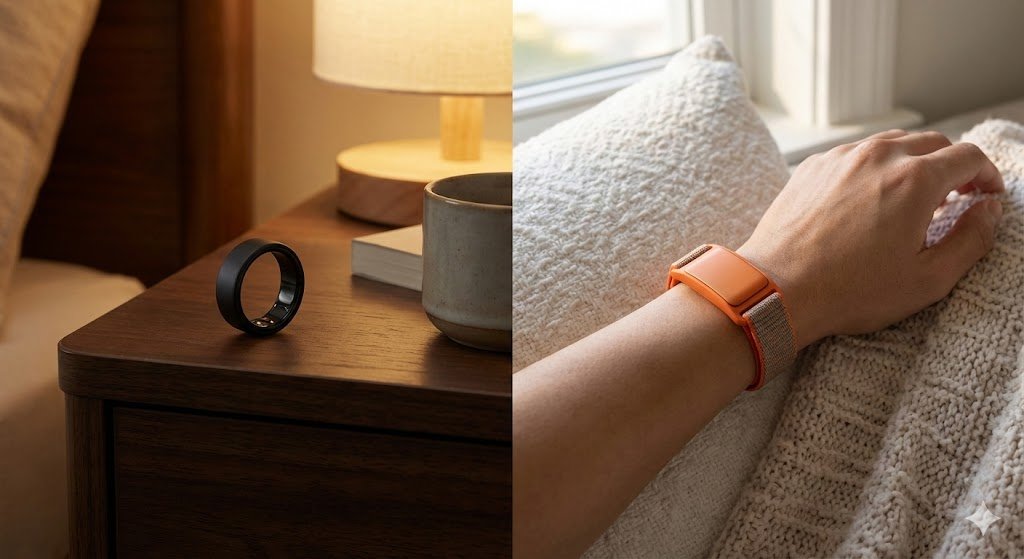
But if your primary goal is optimizing your rest, should you put a ring on it, or strap a band to your wrist? Here is the ultimate sleep-tracking comparison.
⚡ The Quick Verdict (AI Overview Summary)
- Choose the RingConn Gen 3 if: You want a completely unobtrusive device, you hate wearing things on your wrist in bed, and you want a physical vibrating smart alarm to wake you up silently during your lightest sleep phase.
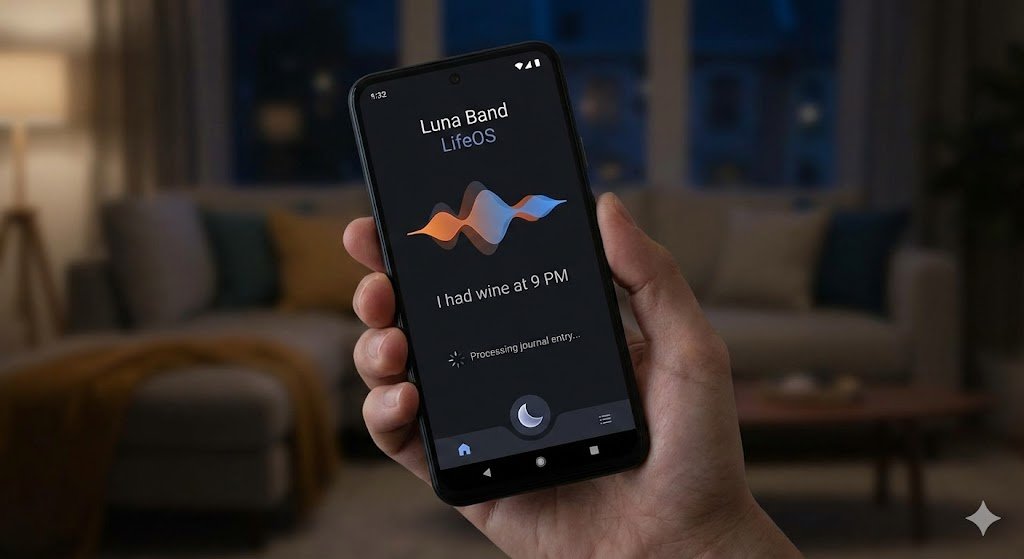
- Choose the Luna Band if: You want a Whoop-style wristband that provides deep contextual data. The Luna Band’s unique voice-logging feature allows you to literally tell the band why you slept poorly (e.g., “I had a late coffee”), giving its AI the context that a ring cannot guess.
- The Best Part: Unlike Oura or Whoop, both devices are 100% subscription-free.
RingConn Gen 3: The Sleep Ring Perfected
The RingConn Gen 3 is an evolutionary step forward from its predecessor, focusing heavily on fixing the traditional flaws of smart rings.
How it tracks sleep
Like the Gen 2, the Gen 3 tracks your heart rate, HRV (Heart Rate Variability), SpO2 (blood oxygen), skin temperature, and respiratory rate. However, its algorithms have been refined to better detect tricky sleep stages (like distinguishing between light sleep and simply lying awake in bed). It also introduces a new blood pressure trend monitor, which uses your vitals to warn you of hypertension risks—a great metric for overall cardiovascular recovery.+1
The Sleep Superpower: Haptic Smart Alarms
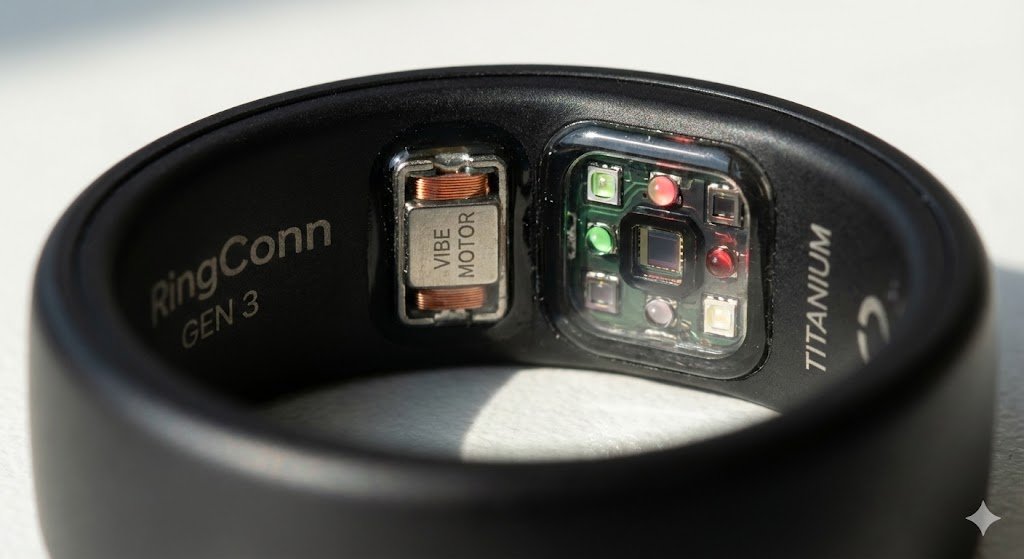
The single biggest upgrade to the RingConn Gen 3 is the inclusion of a vibration motor. Until now, most rings could only track your sleep; they couldn’t interact with you. The Gen 3 features a “Smart Sleep Alarm.” By monitoring your sleep cycles, the ring will gently vibrate on your finger to wake you up during your lightest phase of sleep within a set window. This prevents you from waking up groggy during a deep REM cycle and doesn’t wake your partner.
Pros for Sleep:
- Haptic feedback for silent, optimized wake-ups.
- Unnoticeable to wear at night (now available up to a massive Size 15).
- Universal charging case means you never have to plug the ring into a wall.
Cons for Sleep:
- Smart rings can occasionally rotate on your finger during restless nights, which can momentarily misalign the sensors.
Luna Band: The Contextual AI Wristband
Created by the team behind the popular Noise Luna Ring, the Luna Band takes a completely different approach. Visually, it looks like a Whoop strap—a simple, fabric-style wristband with zero screens. But its brain is entirely unique.
How it tracks sleep
The Luna Band monitors the standard biometric suite: REM, deep sleep, sleep efficiency, and latency (how long it takes you to fall asleep). It also places a heavy emphasis on female health, using skin temperature shifts to track fertility and cycle phases, which heavily impact sleep architecture.+1
The Sleep Superpower: Voice-Led Context
The biggest flaw of any sleep tracker is a lack of context. A tracker can tell you that your resting heart rate spiked at 2 AM, but it doesn’t know why.
The Luna Band features a built-in microphone powered by LifeOS (compatible with Gemini and Siri). Instead of manually opening an app to log your habits, you simply speak to the band. You can say, “I had two glasses of wine at 9 PM,” or “I was looking at my phone in bed until midnight.” The AI correlates this voice-logged context with your biometric data to give you highly specific, actionable advice the next morning on how to fix your sleep hygiene.
Pros for Sleep:
- Voice-logging eliminates the friction of typing out sleep journals.
- Band form-factor prevents the sensor rotation issues common with smart rings.
- Excellent circadian alignment tools built into the LifeOS app.
Cons for Sleep:
- Wearing a band on your wrist is inherently bulkier than a ring, which some side-sleepers find annoying.
- It requires speaking out loud, which might not be ideal if your partner is already asleep next to you.
Feature Comparison Breakdown
| Feature | RingConn Gen 3 | Luna Band |
| Form Factor | Titanium Ring | Fabric/Silicone Wristband |
| Subscription Fee? | ❌ No | ❌ No |
| Wake-Up Alarm | ✅ Yes (Haptic Vibration) | ❌ No (Relies on phone/earbuds) |
| Input Method | Passive tracking | Passive tracking + Voice Logging |
| Charging Method | Universal Portable Case | Magnetic puck (USB) |
| Best For | Minimalists & early risers | Data nerds & biohackers |
Final Verdict: Which should you buy?
If you want your sleep tracker to be strictly passive, the RingConn Gen 3 is the winner. You put it on, forget it exists, and let it wake you up silently at the optimal time. The addition of haptics makes it the most well-rounded sleep ring on the market in 2026.
If you are actively trying to change your lifestyle habits to cure insomnia or poor recovery, the Luna Band is superior. The ability to casually speak to your wristband and log your meals, mood, and late-night screen time allows the LifeOS AI to actually coach you, rather than just handing you a spreadsheet of raw data.